Extraction and drying
Water extraction and drying
Surface water is the easy part. The moisture inside walls, cabinet bases and subfloor is what turns into mold if it stays.
Extraction first
Extraction means getting bulk water out: submersible pumps for depth, truck-mounted or portable extractors for carpet and pad. On a slab floor the water has nowhere to go but sideways, so it often reaches adjoining rooms and closets.
Block walls matter here. Water wicks up the face of painted drywall fastened to furring strips and can sit behind baseboards unseen.
Then the drying system
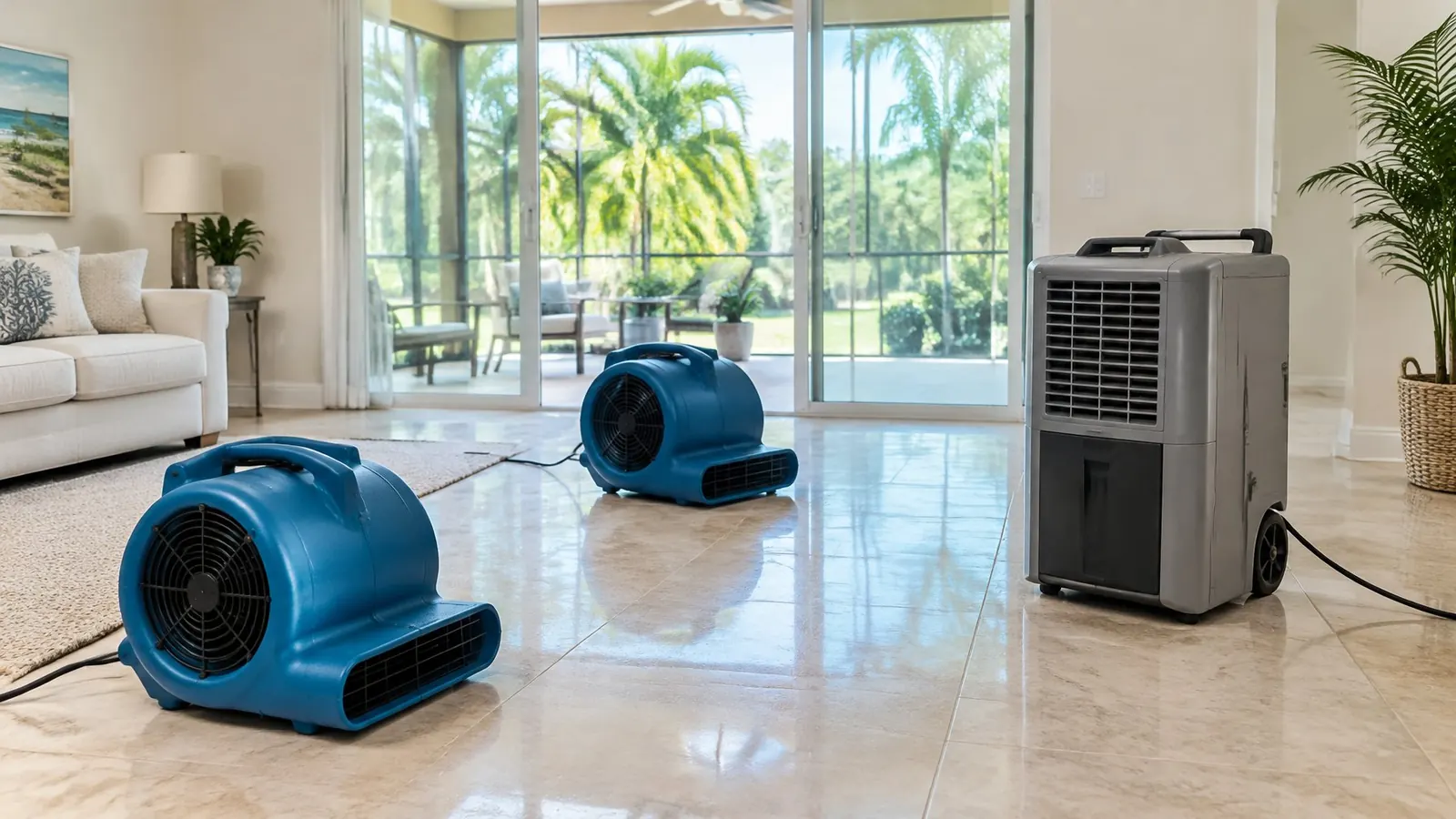
Air movers push dry air across wet surfaces. Dehumidifiers pull the moisture out of that air so it can pick up more. The two work as a pair, and in a humid climate the dehumidifier carries most of the load.
A contractor sets equipment by room volume and wet area, then checks readings on a schedule. Drying is finished when the readings match a dry reference point for the same material, not when the room feels dry.
| Moisture content | A pin or pinless meter on drywall, wood and subfloor |
|---|---|
| Air humidity | A thermo-hygrometer reading temperature and relative humidity |
| Dry reference | A reading from an unaffected part of the same material |
| Moisture map | A sketch or photo log of readings by room and date |
EPA drying window
The EPA says water-damaged areas and items should be dried within 24-48 hours to prevent mold growth, and that indoor relative humidity should ideally sit between 30 and 50 percent.
Sources
Sources were consulted on November 5, 2026. Agency pages change, so check the source before relying on a detail.
Water is still moving. Make the call.
Dial the number and describe what happened. You are connected with an independent restoration contractor who serves your ZIP code.