Pipes and leaks
Burst pipes and plumbing leaks
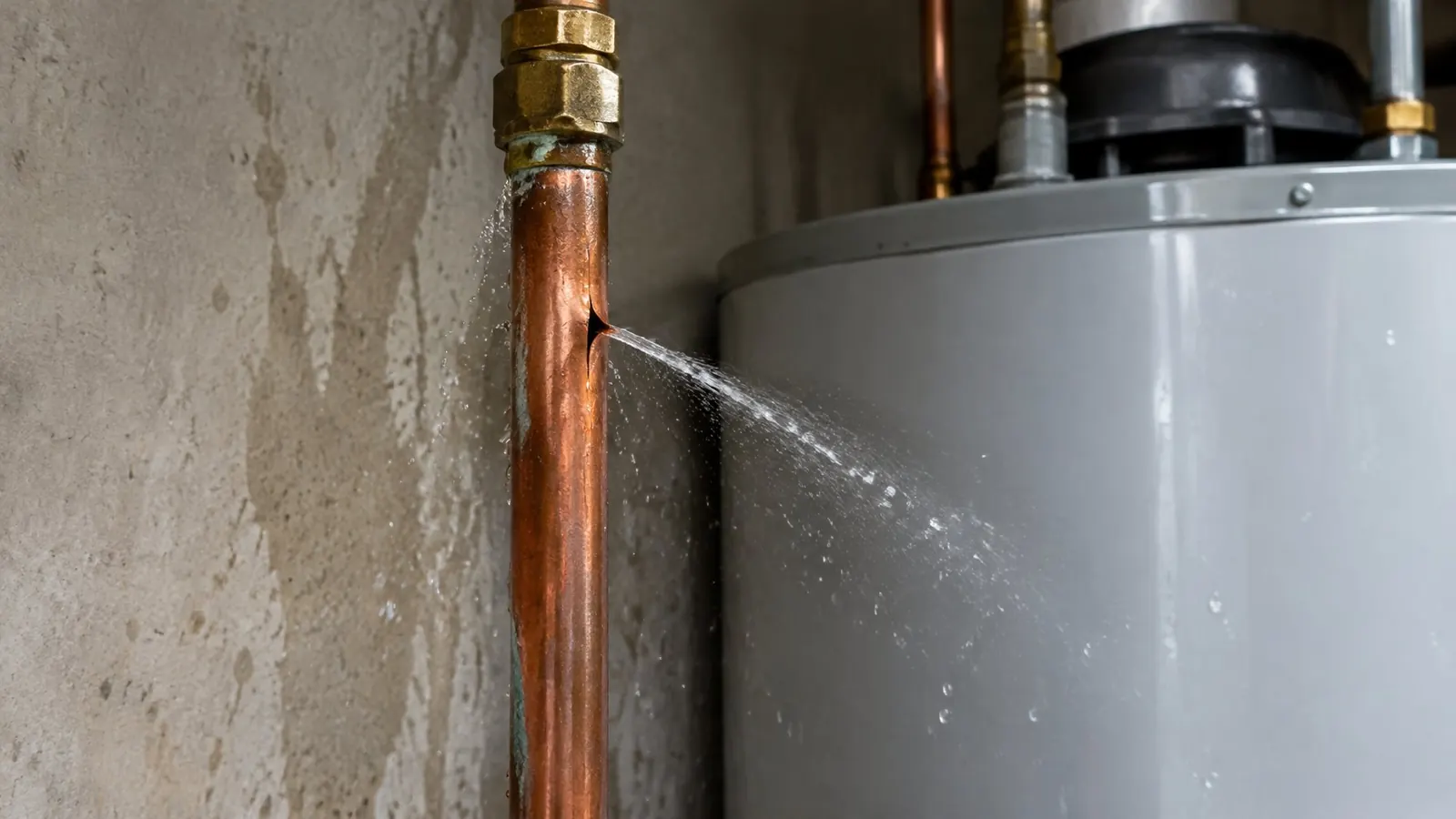
A split supply line can empty into a house all day. Find the valve, close it, then call.
While the water is running
Close the nearest valve
Fixtures have shutoffs under the sink or behind the toilet. The main valve for the house is usually near the water meter.
Open a low tap
Running one faucet drains pressure from the lines once the main is shut.
Kill power in wet rooms
Flip the breakers before wading in. Do not reach into water near a live outlet.
Call a plumber and a restoration contractor
One stops the leak. The other deals with what it soaked. Neither replaces the other.
Slab leaks in block houses
Many homes here sit on concrete slabs with supply lines buried or running through walls. A leak under the slab rarely shows a puddle. Signs include a warm patch on the floor, a meter that spins with everything off, or a sudden jump in the bill.
Slab leaks are a plumbing repair first. Restoration comes in when floors, baseboards and cabinets have absorbed the water.
Frozen pipes
Hard freezes are uncommon on the Treasure Coast, yet cold snaps do happen. Pipes in an attic or on an exterior wall are the usual victims. The response is the same: close the valve, then dry the damage.
What drives the scope
- How long the line ran before it was noticed.
- Whether the water came from a supply line or a drain, since that changes the cleanup.
- Whether it reached cabinets, insulation or the ceiling below on a second floor.
An insurer may treat a sudden burst differently from a leak that went on for weeks. The insurance guide explains the difference.
Water is still moving. Make the call.
Dial the number and describe what happened. You are connected with an independent restoration contractor who serves your ZIP code.